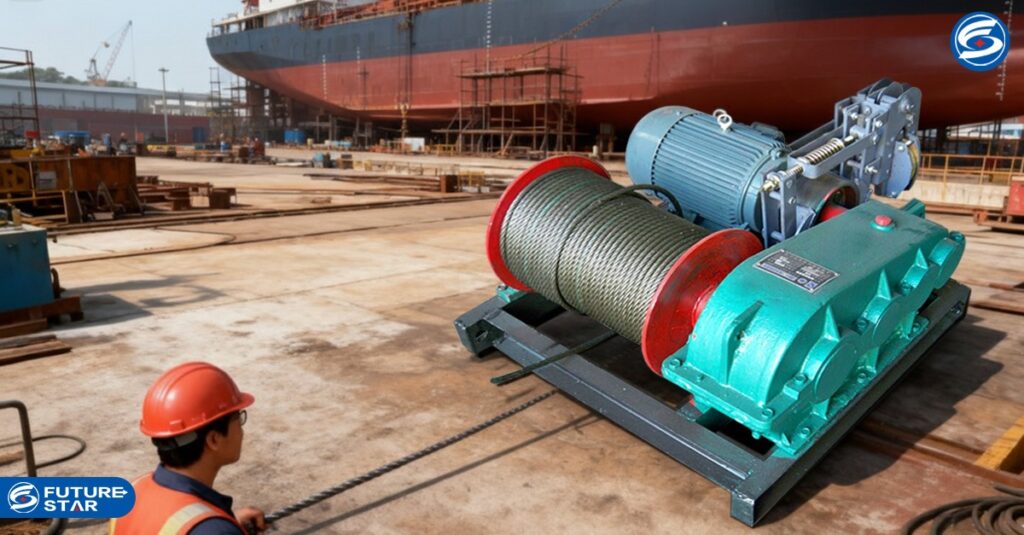
Windlass Functions in the Manufacturing Industry
In the manufacturing industry, efficiency and safety in the production process are key to achieving high productivity. Windlass is a mechanical device used to transport. Pulling or lifting heavy loads by utilizing a system of cables, ropes, or chains driven by mechanical, hydraulic, or electrical power.
What is a Windlass?
Windlass is a mechanical device designed to pull or lift heavy loads. With a rope or cable winding system on a drum driven by a motor or manual power. In the context of the manufacturing industry. Windlasses are often used to move heavy materials. Such as metals, machine components, or semi-finished products, from one point to another within a production facility. Windlasses can be operated manually, electrically, or hydraulically, depending on the specific needs of the industry.
The use of windlasses in the manufacturing industry provides a number of significant benefits, including:
- Increased Production Efficiency With the ability to move heavy loads quickly and safely. Windlass reduces the time required to complete certain tasks, thereby increasing overall productivity.
- Improved Job Safety. Using Windlass reduces the risk of injury from manual lifting, which is a frequent cause of workplace accidents in the manufacturing industry. With lifting automation, workers can focus on tasks that require technical expertise.
- Cost Savings While the initial investment for a windlass may be high. It helps reduce labor costs and material damage due to improper handling.
Challenges in Windlass Usage
Despite its many benefits, the use of windlasses in the manufacturing industry also faces several challenges, such as:
- Maintenance and Repair Costs Windlass, especially those based on electricity or hydraulics, require regular maintenance to ensure optimal performance. Damage to components such as motors or cables can lead to costly downtime.
- Operator Training Operating a windlass requires specialized training to ensure safety and efficiency. Lack of skilled labor can be an obstacle, as revealed in the source on HR challenges in the manufacturing industry.
- Space and Design Limitations In some manufacturing facilities. Windlass installation requires infrastructure design adjustments, such as overhead rails or support structures, which can increase implementation costs.